


Criminal Behaviour Orders (CBOs) and Anti-Social Behaviour Injunctions (ASBIs)
Common issues with CBOs and ASBIs
Expert Youth Crime Solicitors
At GT Stewart, we believe that representing children and young people caught up in the criminal justice system is one of the most important things we do. We understand that it requires particular knowledge and expertise. We have a dedicated team of youth lawyers who have specialised in this area and who are committed to getting the best possible result for their young clients wherever they are representing them. We want to ensure that any mistakes made when they are young do not affect them adversely later in life.
Experienced Youth Crime Lawyers
Our Criminal Defence team has extensive experience representing children and young people appearing before the courts. Cases involving youths require a specialist approach, a clear understanding of youth justice procedure, and careful preparation from the very first hearing.
We represent young clients in the Youth Court, where proceedings are designed to be less formal and more focused on welfare and rehabilitation. We are equally experienced in cases that are sent to the Crown Court due to their seriousness, complexity, or issues of dangerousness. In every case, we ensure that the young person understands the process and feels supported throughout.
We work closely with parents, guardians, and Youth Offending Teams to present the strongest possible case. We prepare detailed mitigation, address safeguarding concerns, and focus on outcomes that protect a young person’s future. Where necessary, we challenge decisions on venue, bail, remand, and sentence to ensure that the court properly considers the child’s age, maturity, and individual circumstances.
Our priority is always to combine robust legal representation with a welfare-focused strategy, ensuring that both the immediate case and the long-term impact on the young person are carefully managed.
Draconian Measure
The guidance suggests that these orders should be applied for in respect of only the most serious & persistent offenders but this is invariably ignored. They can be obtained against anyone over the age of 10. For a CBO the threshold is that the person has engaged in (or is likely to) behaviour that is likely to cause harassment, alarm or distress and that the CBO will help in preventing it. For ASBIs the judge just needs to find that it is more likely than not (balance of probability) that the person has engaged or threatened to engage in antisocial behaviour and that is just and convenient to make the ASBI to prevent antisocial behaviour.
The proposed orders are invariably drafted by police officers rather than lawyers and it shows.
Many of the proposed conditions amount to criminal offences already and so are completely otiose. Some proposed conditions are vague and unworkable e.g. not to be in a public place in a group of more than three including himself - this would have precluded one of our clients from even joining a bus queue and, bear in mind, that the consequence of breach is that the young person is arrested with all that entails as they will probably be kept in detention and could receive a custodial sentence especially if they breach the condition repeatedly.
Quality of evidence relied upon is poor & the standard of proof is low.
This is very worrying given the effect these orders have on young people if granted. The evidence often follows the same format with statements being recycled from one application to another. A senior officer will provide a generic statement regarding the effect of gangs on the local community. Several other officers will then provide statements about our client that describe behaviour deemed likely to cause harassment/alarm/distress. As the burden of proof is to the civil standard for ASBIs, the young person’s history of arrests and CRIS reports is trawled through and served up in a soup of unproven allegations. Accordingly, evidence that was not strong enough to secure a conviction (most often not even a charge) is relied on to secure an ASBI.
The test has been lowered.
- With the old Anti-social Behaviour Orders (ASBOs) the test was “necessity” + proportionality.
- With CBOs the test is would it be ‘helpful’ (in preventing young person in engaging in behaviour likely to cause harassment, alarm or distress) + proportionality.
- With ASBIs it is a ‘just and convenient’ test + proportionality.
Insufficient liaison with Youth Offending Team.
Therefore impact of current or proposed YOT intervention (i.e. orders with which young person engaged) is poorly assessed if it is assessed at all.Youth Offending Team may simply rubber stamp CBO applications as being a good thing.If they provide any response at all (which there is a statutory duty to) it is generally a bland assent to the proposed order.
CBOs are not supposed to be used to punish twice but invariably that is the effect.
The applications are often cut & paste jobs rather than drafted to reflect the circumstances of the young person.
We have seen lists of people with whom it is proposed that our client should not have contact which has included individuals in detention serving sentences outlasting the CBO & in one case an individual who was, in fact, dead. This shows the lack of care and attention that the applications can be given. It is also very insensitive.
Orders set young people up to fail.
The lists of people with whom the young person should not have contact often runs into double figures. This is put on the basis that these are gang affiliations. As often as not, the young person has grown up with these people and they live locally. Accordingly, they share and use the same facilities in terms of schools, shopping malls, parks, youth clubs, transport, GP surgeries, and YOT offices. Avoiding contact as opposed to antisocial behaviour is an absolute minefield hence the reason why we deem it setting the young person up to fail. We have had examples where the proposed order included young people that went to the same school, used the same transport, went to the same YOT, and same GP practice.
Whilst concerns can sometimes be well placed generally these orders are completely the wrong tool.
These orders serve to criminalise and disaffect young people at the very age when agencies should be supporting them to succeed and engage well with their families, schools & communities. They create more friction between the young person who often has numerous issues in their lives that require long term and intensive intervention which is not best achieved by a list of ‘dos and don’ts’.
In the course of defending these orders (and some lawyer do not oppose them when they should) we have discovered clients that have profound & debilitating learning difficulties which previously went undetected by their family, their YOT, and even their school.
These difficulties made them ripe for manipulation & exploitation. If these learning difficulties had been picked up as they should have been then it is highly likely that with appropriate support and intervention they could have been diverted from criminal activity in the first place.
There is already sufficient provision and tools if these are used effectively – and these can be used without demonising the young person.
The current statutory provisions are ample to confront & constrain criminal behaviour. Resources should be focused on education, Social Services Departments, Community Mental Health facilities and the YOT to deliver effective intervention. The imposition of CBOs & ASBIs demonises and criminalises individual children who are the main victims of the violence and gang activity.
Why choose GT Stewart?
There is a highly experienced youth lawyer in each of our offices who deals with a wide range of offences from criminal damage to murder. At every stage, we try to ensure that the young client understands what is happening and is able to fully participate in their defence. In addition to advocacy in criminal proceedings, we have successfully challenged decisions to prosecute and decisions to disclose information on an enhanced DBS certificate. We oppose applications to impose Criminal Behaviour Orders and applications for Gang Injunctions.
Our Expert Lawyers are ready to Help



GT Stewart has established itself as a leading firm in the UK, specialising in both private cases and also Legal Aid work.
Meet some of our Criminal Defence team







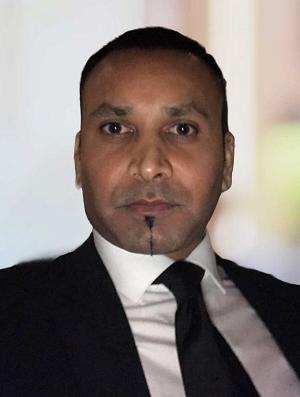





























Speak to one of our Youth Crime Solicitors
Our Tenacity Results in Success

We represented an appellant whose conviction was referred to the Court of Appeal by the CCRC on the basis that there was no jurisdiction to hear one of the counts, as it involved alleged conduct committed outside the UK.
By | May 27, 2026
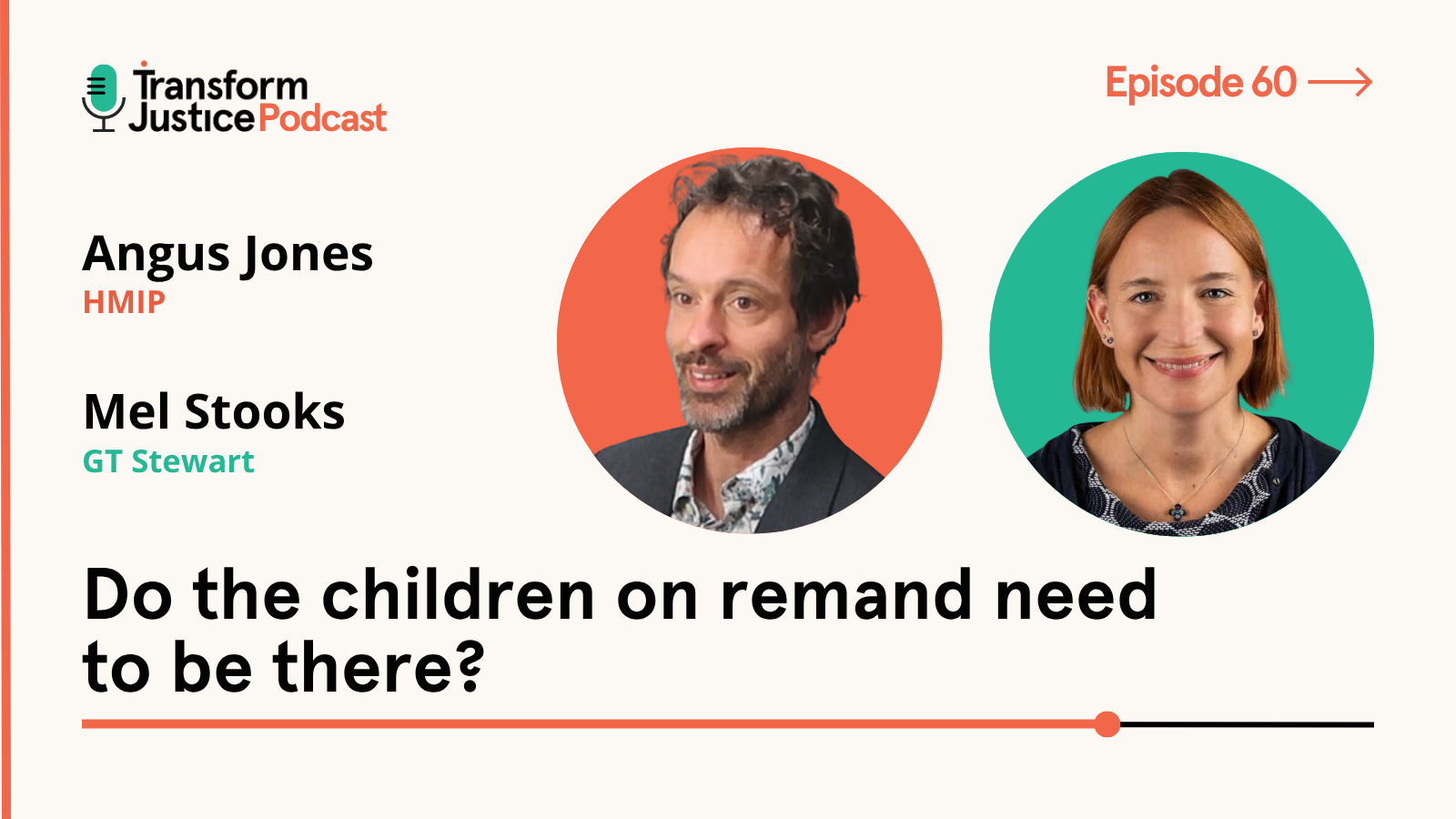
Partner and Head of Youth Crime, Mel Stooks, recently featured alongside Angus Jones from HM Inspectorate of Prisons on the latest Transform Justice podcast episode, “Do the children on remand need to be there?”, which is now live.
By | May 27, 2026

We represented a client in proceedings where the prosecution sought to invoke the “slip rule” under section 385 of the Sentencing Act 2020.
By | May 21, 2026
Client Testimonials
"5 star firm. I've had the support of GT Stewart Solicitors across countless cases in the Youth Court, Magistrates Court, and Crown Court, and I honestly couldn’t recommend them enough. Jamie has always been incredible, keeping me updated with every new development and consistently being there whenever I needed help or guidance. Mel Stooks (Head of Youth) helped me more times than I can count while I was under 18 an absolute diamond who truly cared and guided me through some of the toughest times. Bubs (Mr. Dhamrait) was always there for me during police station visits. I couldn’t thank him enough for his honesty and straight-to-the-point advice about what should be done and how. And Gerard is the greatest barrister I could ever ask for. His knowledge in the courtroom made everything easier to face, and whenever I didn’t understand something, he always took the time to advise me and explain the best way forward. I’ll always be grateful to the whole team their professionalism, dedication, and support have made a huge difference in my life."